3Faktur Online 3D Printing Service
Here you will find a brief summary of the services offered in our 3D printing service, as well as information on the ordering process and technical details for configuration in our online calculator. More detailed information can be found on the respective detail pages.
Table of Contents
1) Ordering Process
A detailed guide to the ordering process can be found here: Quotation & Ordering Process.
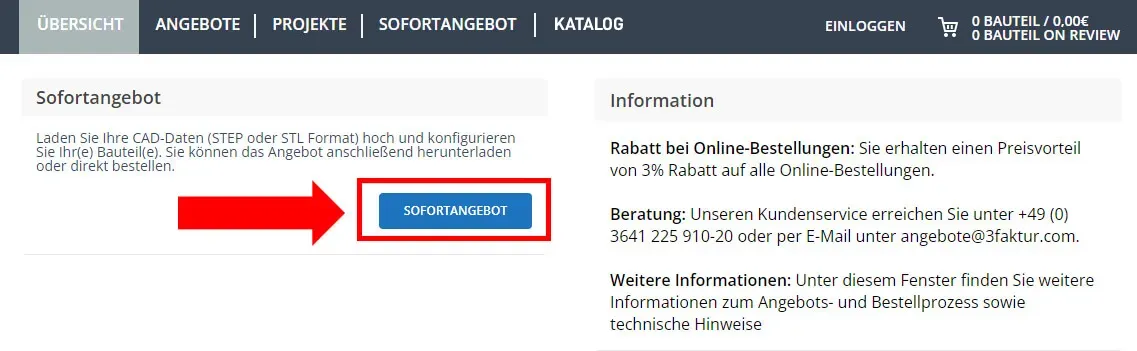
Step 2: Configuration
Configure material, color, production time, quantity, and optionally additional services such as surface finishing, etc.
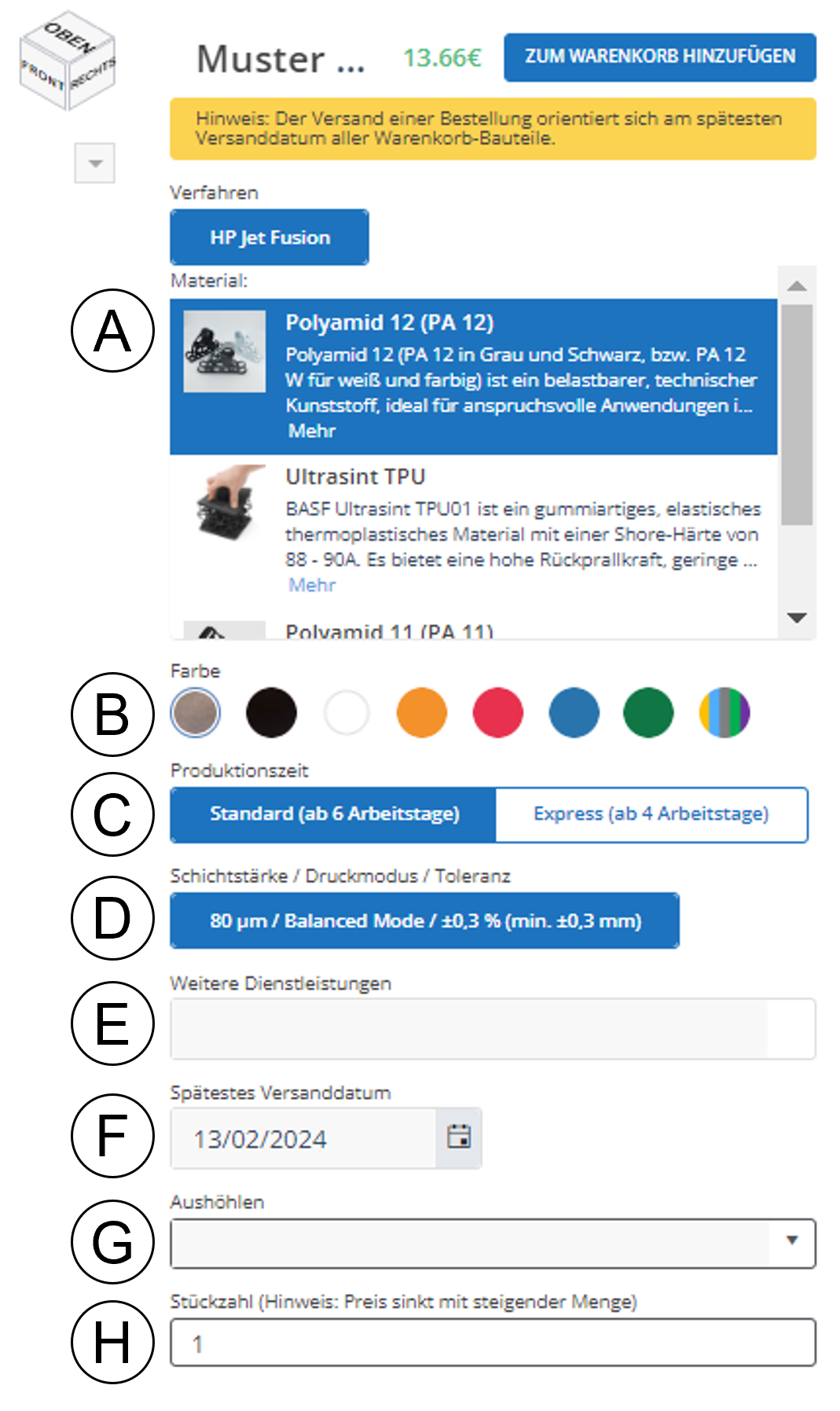
Step 3: Optional: Download Online Quote
After adding the part(s) to the cart, you can download your quote as a PDF. For self-created quotes, the online prices apply, even if the quote is later triggered by your purchase.
Go to the cart and click “Download online quote”. A login to your account is required for this process.

Step 4: Checkout
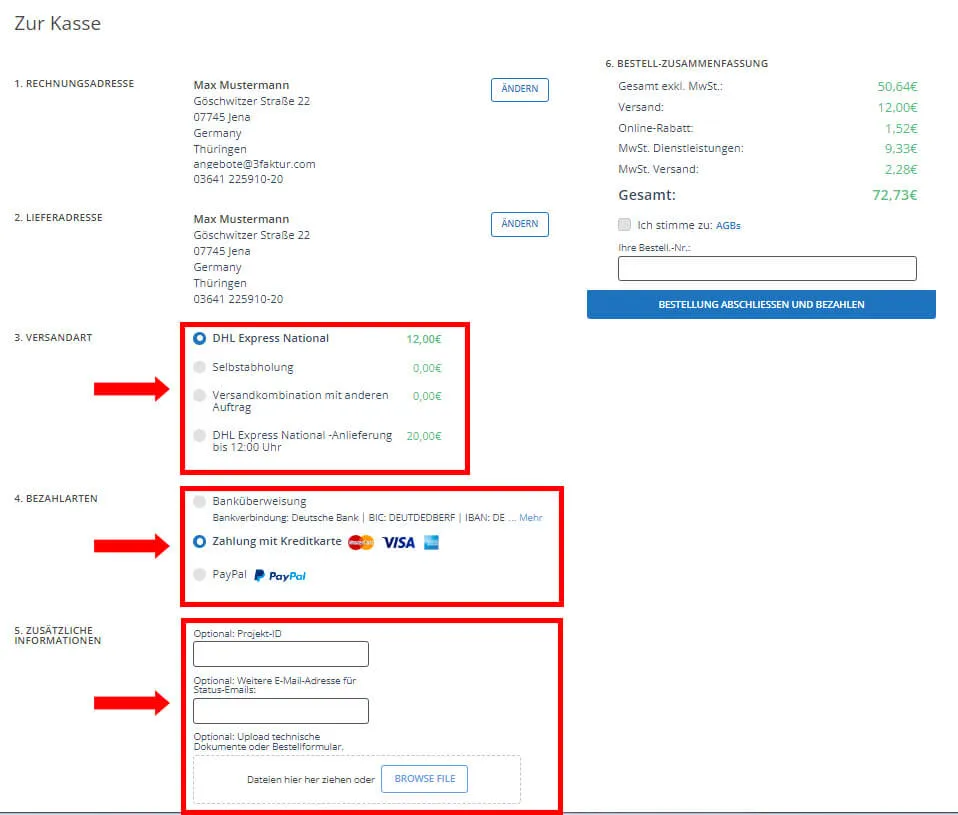
By clicking “Proceed to checkout”, you will be taken to checkout. There you enter your details (billing and shipping address), select a payment method, confirm terms and conditions and privacy policy, and confirm your order.
2) Materials & Color
2a) Material
More information about our materials for our 3D printing service can be found on the page Materials Overview. All materials are produced using the powder bed 3D printing process Multi Jet Fusion.
PA 12 (Polyamide 12)
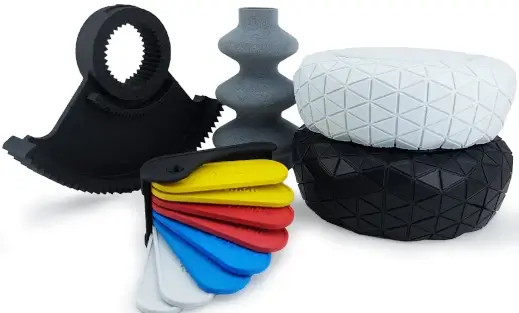
Polyamide 12 is a very powerful “all-round” plastic and is suitable for a wide range of industrial applications. The material is available in five versions in a white base color. The key figures of the two are comparable.
BASF UltrasintTM TPU01
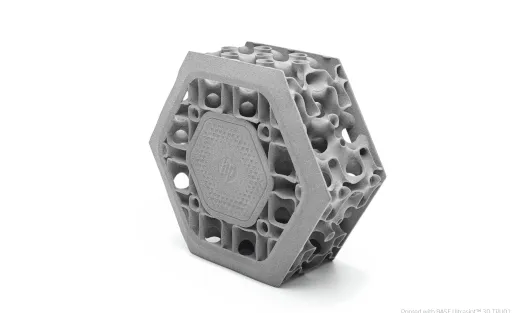
BASF Ultrasint TPU is an elastic plastic with a Shore hardness of 88–90A. The material is used for damping, grips, seals, orthoses, grippers, or heavily stressed housings and covers.
Polyamide 11
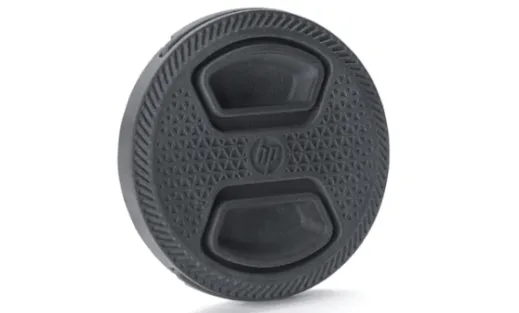
PA 11, made from renewable sources, surpasses PA 12 in flexibility and impact resistance. The material stands out due to its toughness and is ideal for film hinges, snap-fit connections, and robust orthoses.
2b) Colors
Gray
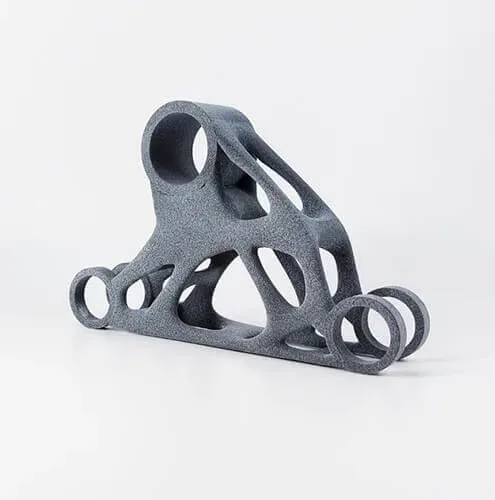
Gray is the production color and results from a remaining white content on the otherwise black parts. The gray is technically somewhat inhomogeneous and is therefore not recommended for visible surfaces.
Black
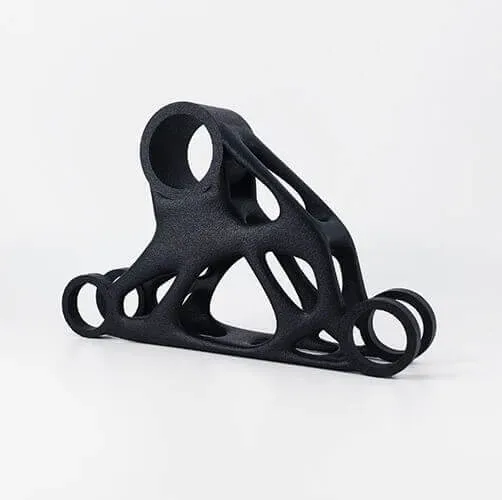
The remaining white content on the surface is blackened by dip dyeing. This is pigmentation; no coating layer is applied.
White
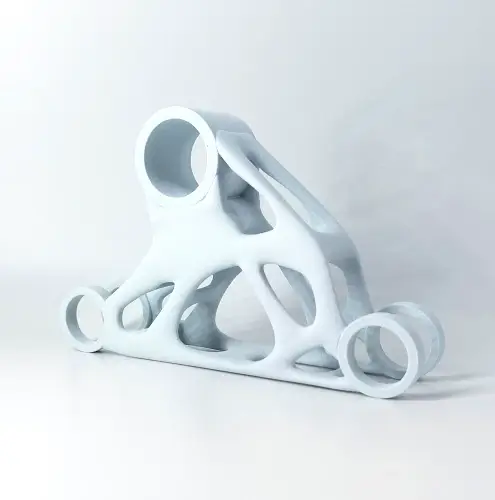
Parts made from PA 12 | White (under PA 12 and color White in the configuration) are very similar to the gray material in terms of key figures. The white has a slight bluish tint and is highly resistant to UV exposure.
Colorful
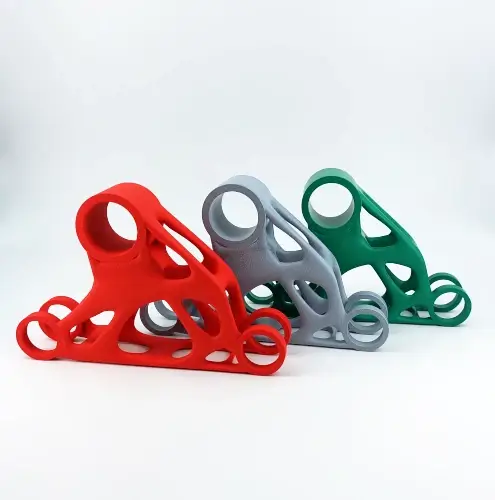
For colored finishes, PA 12 | White is dyed using Dyemansion DeepDye Coloring. Standard colors are dyed more frequently and have a lower minimum order value. Special colors are dyed on customer request, which results in a higher minimum order value. For the latter, you can select the desired color from the drop-down menu.
3) Production Time & Latest Shipping Date
The standard time indicates the normal turnaround time from order to shipment in our 3D printing service. Express production times are available for some materials or combinations. For both options, the deadline is 12:00 noon; for orders placed after 12:00 noon, the stated production time applies from the following day.
The latest shipping date calculates the expected shipping date based on the selected production time. For orders with multiple items and shipping dates, the latest one applies.
4) Layer Thickness / Print Mode / Tolerance
The information provided consists of general details about the printing process and tolerance.
- Layer thickness: Indicates the height of one layer in the Z direction. This varies depending on the material and print mode.
- Print mode: The print modes vary depending on the PA12 material variant and are listed on the respective detail pages.
- Tolerance: Indicates the general tolerance for the respective material.
5) Additional Services
5a) Surface Finishing
Chemical Smoothing
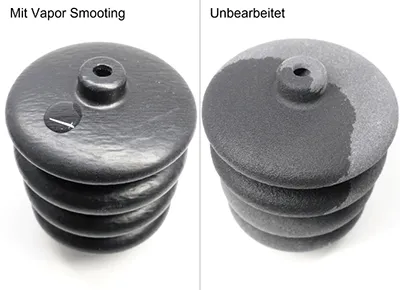
In this process, the surface is smoothed and sealed using a vaporized solvent. In this process, you can choose the contact surface – detailed information can be found here.
More about chemical smoothing (“Vapor Smoothing”).
Shot Peening
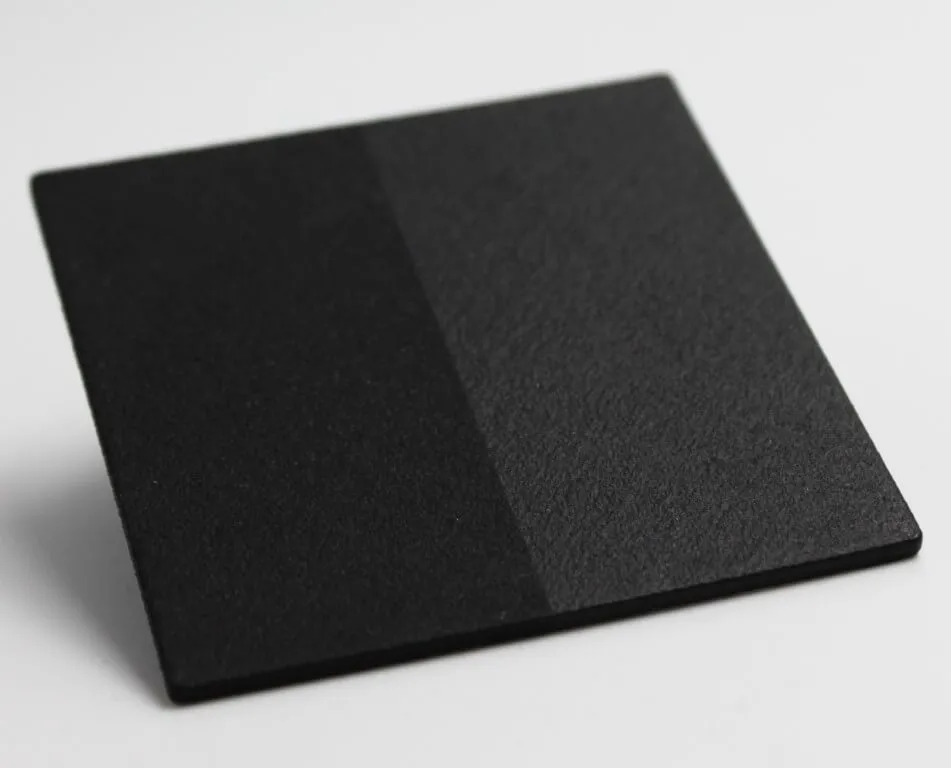
Shot peening is included in the price for all dyed parts and does not need to be ordered separately. More about shot peening.
5b) Define Part Orientation
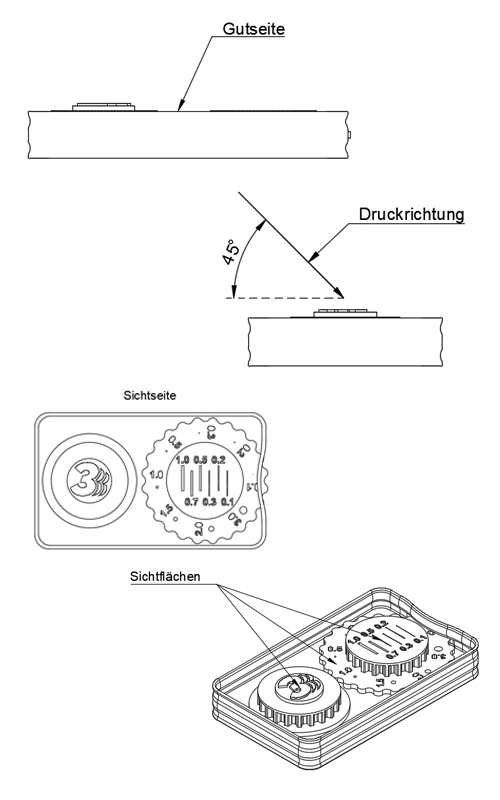
You have the option to define the orientation of the parts during printing yourself. To do this, please upload a technical drawing in which the desired orientation is clearly marked, for example with an arrow. This service is offered free of charge.
However, we would like to point out that this option is primarily suitable for experienced users of Multi Jet Fusion technology, as the part orientation has a significant influence on the quality of the finished part.
Please note that the build orientation has a significant impact on part quality. When the orientation is specified by the customer, our usual standards regarding dimensional accuracy and surface finish cannot be guaranteed.
5c) Quality & Certificates
As standard, you can order an initial sample inspection report, a works certificate (inspection certificate 2.2), or an acceptance test certificate (inspection certificate 3.1) through our 3D printing service. For other formats or requirements, please contact our customer service.
6) Hollowing
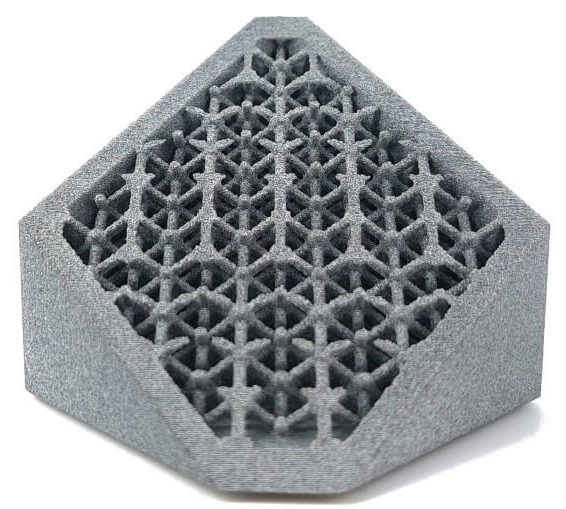
In the case of solid geometries with high wall thicknesses, the process heat generated during 3D printing can lead to surface damage, warping, or dimensional deviations. To minimize these risks, such parts are hollowed out by default. In the cavities, we additionally insert a lattice structure to dissipate heat evenly and stabilize the shell.
- Outer shell (shell): Closed structure that defines shape and dimensional accuracy.
- Interior / powder core: Inside, compacted, lightly sintered PA-12 powder remains with lower density and bonding than the outer shell, reinforced with a lattice structure.
Shell thicknesses by material variant:
- PA 12 | Classic:
- Recommended shell thickness: approx. 3 mm
- Solid body possible on request, but with the quality risks mentioned above.
- All other PA 12 variants:
- Recommended shell thickness: approx. 2.0 mm
- Hollowing is mandatory (except for PA 12 | Performance), as solid bodies cannot be manufactured reliably in these modes.